

A Homeowner's Guide to Patio Door Security

A patio door should bring light and access to your backyard, not create an easy entry point. This guide to patio door security helps Folsom-area homeowners look at the full door system: the lock, the track or hinges, the glass, the frame, and the habits that affect everyday security.
Patio doors are often located where a visitor cannot be seen from the street. They also receive more wear than many exterior doors, especially in homes with children, pets, pool access, or frequent outdoor entertaining. A lock that worked well when installed may no longer line up correctly after years of use. Start with a careful inspection before deciding what needs repair or replacement.
Start With the Type of Patio Door You Have
Most patio doors are sliding glass doors, French doors, or hinged doors with large glass panels. Each has different weak points.
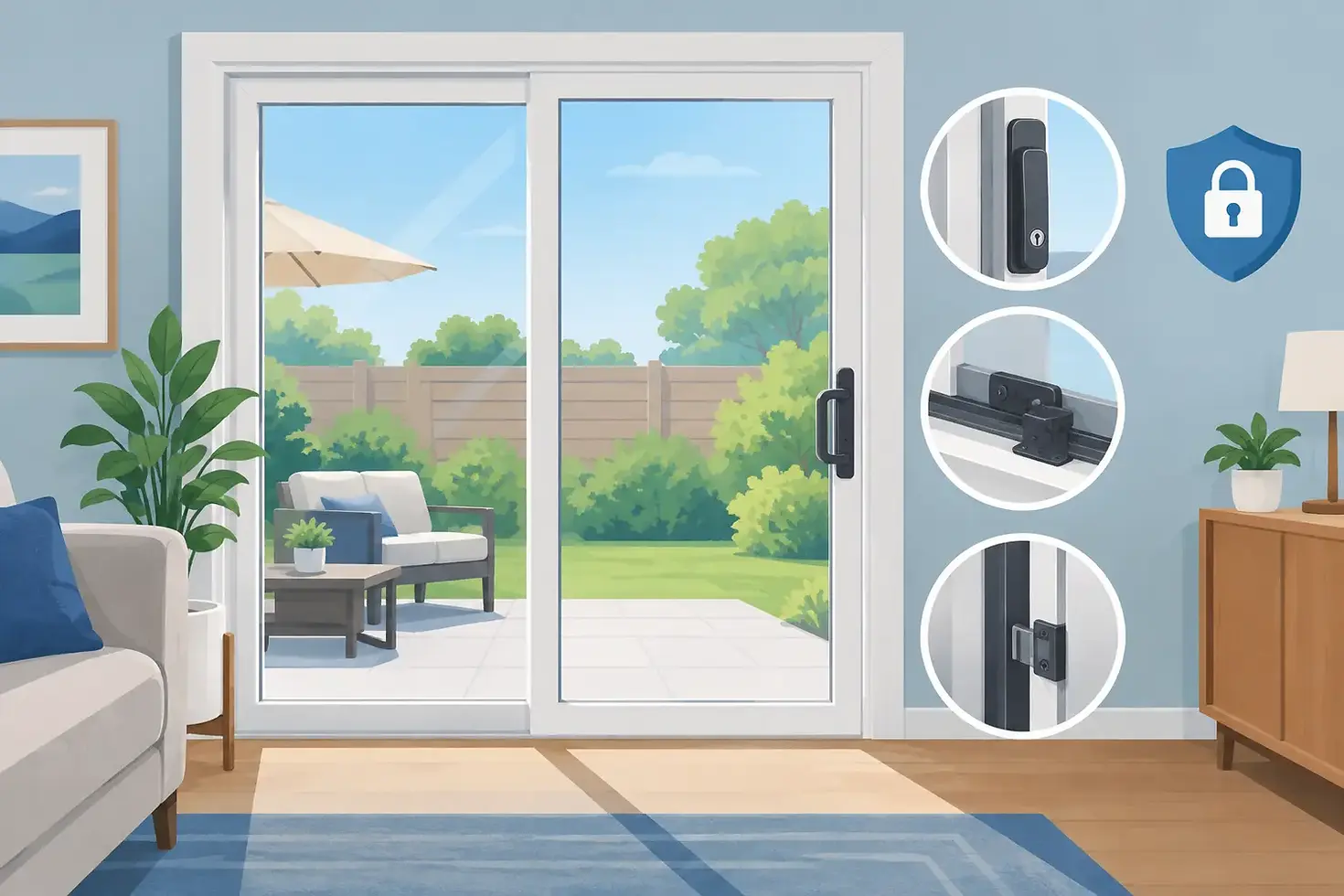
A sliding door depends on its latch, rollers, track, and frame alignment. If the door can be lifted, shifted, or opened with a small amount of force when locked, the issue may be more than the latch. French doors and other hinged patio doors need secure deadbolts, solid strike plates, and protection at the inactive door panel where applicable.
Look closely at the frame and door material as well. Wood frames can swell or deteriorate. Aluminum tracks can bend, collect debris, or wear down. Vinyl doors may become misaligned over time. Security hardware only works as intended when the door closes fully and the lock engages cleanly.
Check Whether the Lock Actually Holds
Close and lock the door from inside, then gently try to move it. A properly functioning lock should engage without forcing the handle or lifting the door. If you need to push, pull, or lift the door to make the lock catch, schedule an adjustment or repair. Forcing a latch can damage it further.
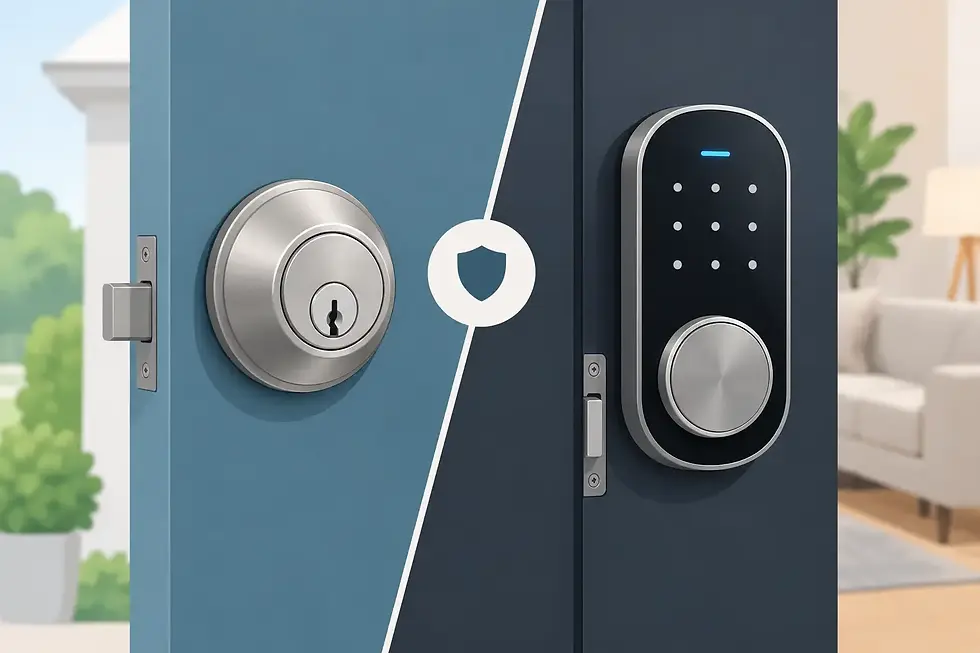
Many older sliding patio doors use a basic hook-style latch. These can provide a level of closure, but they are not always sufficient as the only security measure. A keyed lock, an upgraded mortise lock, or a properly installed secondary locking device may be appropriate, depending on the door design and who needs access.
For hinged patio doors, a quality deadbolt is usually the primary security component. The bolt should extend fully into the frame, and the strike plate should be secured with screws long enough to reach solid framing rather than only the trim. If the door has double panels, make sure the fixed or inactive panel is secured at the top and bottom when the door is locked.
Do not ignore loose handles, sticky keys, or a latch that occasionally fails to catch. These are early signs that the hardware or alignment needs attention. A repair is often less disruptive than waiting for a complete lock failure.
Improve Sliding Door Track Security
A sliding door should remain in its track when locked. Worn rollers and an uneven track can allow excess movement, which can make the door easier to manipulate and harder to lock reliably.
First, clean the lower track and remove dirt, leaves, pet hair, and other debris. Then check whether the rollers need adjustment. The door should slide without scraping, but it should not have enough vertical play to lift out of position. Roller adjustments are common maintenance, though damaged tracks, bent frames, or worn hardware may require professional service.
A security bar or properly fitted dowel placed in the lower track can help prevent the door from being slid open. It should fit tightly enough to stop movement but be easy for household members to remove in an emergency. Treat it as a secondary measure, not a replacement for a working primary lock.
Some sliding doors can also use anti-lift devices installed at the top of the frame. These limit the space available to raise the door. The right option depends on the door construction, and installation should not interfere with smooth operation or emergency exit needs.
Do Not Overlook the Glass and Nearby Access
Glass is a visible part of patio door security, but it should be considered realistically. Standard glass can be broken, and glass near a thumb-turn lock may allow someone to reach the lock after breaking a panel. A keyed lock can reduce that specific concern, but it creates a safety trade-off: the key must be immediately available to occupants when the door is used as an exit.
Tempered or laminated glass, security film, and exterior lighting can all add time and attention to an attempted entry. They are not substitutes for sound locks and a secure frame. Security film, for example, can help hold broken glass together, but it does not make a patio door impenetrable.
Also inspect the area around the door. Ladders, tools, patio furniture, and heavy planters can give an intruder cover or something to use against the door. Store tools and ladders in a locked location, keep shrubs trimmed enough to preserve visibility, and make sure outdoor lighting covers the patio entry without shining harshly into a neighbor's property.
Patio Door Security for Families and Rental Properties
Security changes slightly depending on who uses the property. A household with young children may need a higher-mounted auxiliary lock to help prevent unsupervised access to a pool or yard. That device should not create a dangerous delay during an emergency. Test it with every adult in the home and keep exit planning in mind.
For rental homes and managed properties, rekeying after a tenant moves out is a practical first step. Previous tenants, contractors, cleaners, or guests may still have working keys. Rekeying allows the lock to work with a new key without necessarily replacing the entire lock, provided the hardware is in good condition.
Property managers should also document which keys operate patio doors, gates, storage areas, and common entrances. A simple key-control process helps avoid the uncertainty that comes with copied keys and informal handoffs. If a patio door lock is damaged during a turnover, address both the repair and the reason for the damage before the next tenant moves in.
Know When a Repair Is Enough
Not every patio door needs a full replacement. A locksmith can often correct alignment issues, replace worn lock components, service a damaged latch, or rekey compatible keyed hardware. Repair is generally the sensible choice when the door frame is sound, replacement parts are available, and the lock can be restored to reliable operation.
Replacement makes more sense when the lock is obsolete, repeatedly fails, cannot be keyed or repaired properly, or no longer matches the security needs of the home. It may also be necessary when the door frame, strike area, or track has significant damage. The goal is not to add hardware for its own sake. It is to create a door that closes, locks, and opens safely every time.
When hiring help, verify the locksmith's California licensing status and ask what work is being recommended before it begins. A professional should be able to explain whether the problem is the lock, the door alignment, the track, or a combination of issues. OutLock Locksmith takes that straightforward approach because homeowners deserve clear answers before authorizing work.
A Practical Security Check You Can Do Today
Walk through this short check at least once a year and after any break-in attempt, remodeling project, or tenant change:
Close the patio door and confirm the lock engages without lifting, pushing, or forcing it.
Check for loose handles, worn screws, damaged strike plates, or excess movement in the door.
Clean the sliding track and look for roller wear, debris, or signs the door can be lifted.
Confirm secondary security devices are fitted correctly and can be released quickly from inside.
Review keys, remotes, and access habits if someone has moved out or a key has gone missing.
A patio door does not have to be complicated to be secure. It needs hardware that fits the door, proper alignment, sensible secondary protection where needed, and regular attention before small problems become urgent ones. If the lock feels unreliable, do not wait for it to fail on the day you need it most.

Comments