

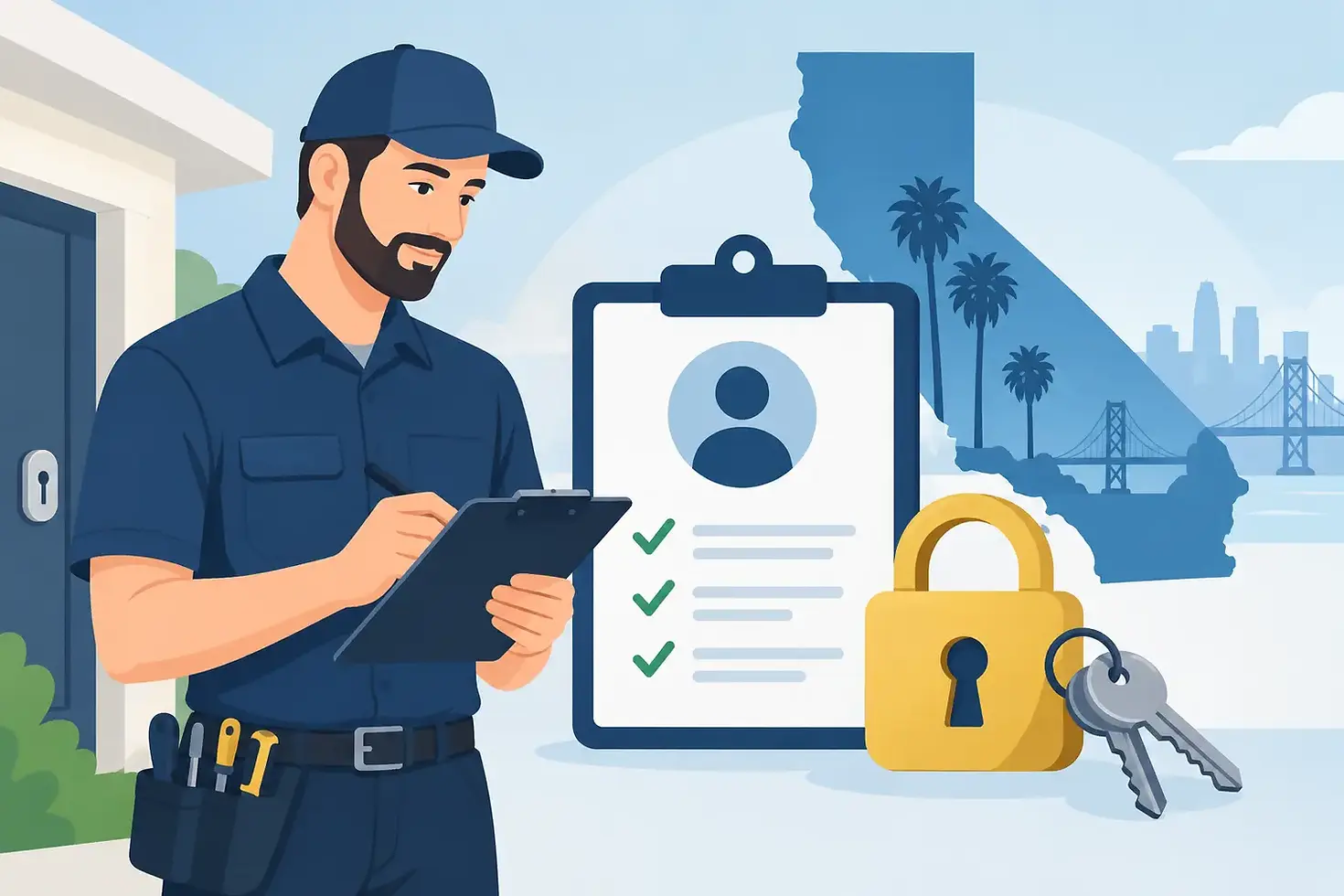
Are Locksmiths Background Checked in California?

When someone is about to rekey your home, repair your business door, or program a replacement car key, trust is not a small detail. Are locksmiths background checked? In California, legitimate locksmith licensing involves screening requirements, but customers should still verify who they are hiring before granting access to a home, office, vehicle, or property.
A professional locksmith is often called during a stressful moment: a lost key, a tenant move-out, a damaged lock, or a car that will not start because the key remote stopped working. That urgency can make it easy to choose the first business that appears in a search result. Taking a minute to confirm licensing and identity can protect your property and help you avoid unqualified operators.
Are Locksmiths Background Checked in California?
California regulates locksmith businesses through the Bureau of Security and Investigative Services, commonly called BSIS. The licensing process includes fingerprint-based criminal history screening for people associated with the license and, depending on their role, registered locksmith employees. Applicants are evaluated as part of the process rather than simply paying for a business listing and calling themselves a locksmith.
That is a meaningful consumer protection, but it is not a promise that every person advertising locksmith work has an active license or that every business operates to the same standard. A criminal background check is one part of professional screening. It does not replace checking a company’s current license status, confirming the technician’s identity at the door, and making sure the service being proposed makes sense for the problem.
For example, a locked residential door does not always need to be drilled and replaced. In many cases, the lock can be opened without destructive work, repaired, or rekeyed so old keys no longer work. A trustworthy locksmith should explain the options before starting whenever the situation allows.
What California Locksmith Licensing Means for Customers
A valid California locksmith license shows that the business has gone through the state’s required licensing process. It gives customers a way to verify that the company is operating under an identifiable, regulated business rather than an anonymous lead generator or unlicensed operator.
This matters because locksmiths work around high-value access points. They may handle keys to your home, access a commercial suite after hours, rekey locks between tenants, or create a replacement vehicle key that communicates with your car’s immobilizer system. The work requires technical skill, but it also requires sound judgment and respect for property ownership.
A licensed business should be prepared to identify itself, provide its license information when requested, and explain the work in plain language. If a technician is reluctant to show identification, arrives in an unmarked situation with no clear business connection, or pressures you into an immediate high-cost replacement, pause before authorizing work.
Licensing also creates accountability. If something goes wrong, customers have a clearer record of who performed the service. That is very different from dealing with a temporary online listing that changes names, phone numbers, and addresses whenever complaints appear.
Background Checks Are Not the Only Question
Asking whether locksmiths are background checked is a smart start, but it should be part of a broader decision. A background screening addresses one type of risk. The quality of the actual service depends on licensing, experience, communication, pricing practices, and the technician’s ability to diagnose the issue correctly.
A locksmith may be asked to work on a front-door deadbolt, a commercial lever handle, a panic bar, a mailbox lock, or a modern vehicle transponder key. These are not interchangeable jobs. The right technician should understand the hardware in front of them and recommend a repair, rekey, replacement, or key programming service based on the condition of the lock and the customer’s needs.
For property managers, this is especially important during tenant turnover. Rekeying a lock is often more practical than replacing every piece of door hardware, provided the lock is in good condition and the existing keyway meets the property’s security needs. For a small business, replacing worn hardware may be the better choice when a door is misaligned, a latch is failing, or multiple staff members need dependable access.
The best answer is not always the most expensive one. It is the one that restores security and function without unnecessary work.
How to Verify a Locksmith Before Service Begins
You do not need to become an expert in locks to hire responsibly. A few direct questions can reveal a great deal about the business you are considering.
First, ask whether the company is licensed in California and request its BSIS locksmith license information. A legitimate local provider should treat this as a normal question, not an inconvenience. You can then verify the license through the state before work begins when time permits.
Second, ask for a clear estimate. An estimate may change if the technician finds hidden damage or discovers that the lock hardware is different from what was described, but the reason for any change should be explained before additional work is done. Be cautious with vague promises of a very low service call followed by pressure to approve a much larger bill on arrival.
Third, ask what approach the locksmith expects to use. If you are locked out, will they attempt non-destructive entry first? If you need security after lost keys, is rekeying appropriate, or does the lock need replacement? If you need a car key, can they provide and program the correct key or remote for your vehicle? Clear answers show that the company is focused on the job, not just a sales pitch.
Finally, pay attention to ownership verification. A professional locksmith should take reasonable steps to confirm that you are authorized to access the home, vehicle, or business. For a vehicle, that may mean checking identification and registration. For a rental property or commercial space, it may involve confirming your authority with a lease, property manager, or business contact. This can feel inconvenient during an urgent lockout, but it is a sign the provider takes access control seriously.
Warning Signs That Deserve a Second Look
Not every bad experience begins with an obvious red flag. Some operators rely on urgency, confusing pricing, or unfamiliarity with licensing rules. Watch for a business that cannot provide a clear company name, refuses to discuss licensing, gives no meaningful estimate, or insists that drilling and replacement are the only options without inspecting the lock.
Another concern is a company that advertises as local but cannot identify a real service area or business presence. Folsom customers deserve a locksmith who understands the area and is accountable for the work performed there, not a call center that dispatches an unknown subcontractor with little oversight.
Online reviews can be useful, but they should not be the only proof of legitimacy. A polished profile can be created quickly. Licensing, clear communication, identification, and a reasonable explanation of the work are stronger signs that you are dealing with a professional.
Why Local Accountability Matters
For homeowners, drivers, and business owners in Folsom and the Sacramento area, the right locksmith relationship can extend beyond one emergency call. A provider who handles a home rekey carefully may later help repair a sticking deadbolt. A property manager may need recurring turnover rekeys. A small business may need a worn lock replaced before it becomes a costly after-hours problem.
That is why local accountability matters. A service business with a reputation to protect has a reason to show up on time, communicate honestly, and stand behind straightforward work. OutLock Locksmith places verified California BSIS licensing at the center of that commitment because customers should not have to guess who they are letting into their property.
If you need locksmith service, do not let the urgency of the moment make the choice for you. Ask about licensing, confirm who is arriving, understand the recommended work, and keep the conversation clear from the first call. Those small checks can make a difficult situation feel much more manageable.

Comments