

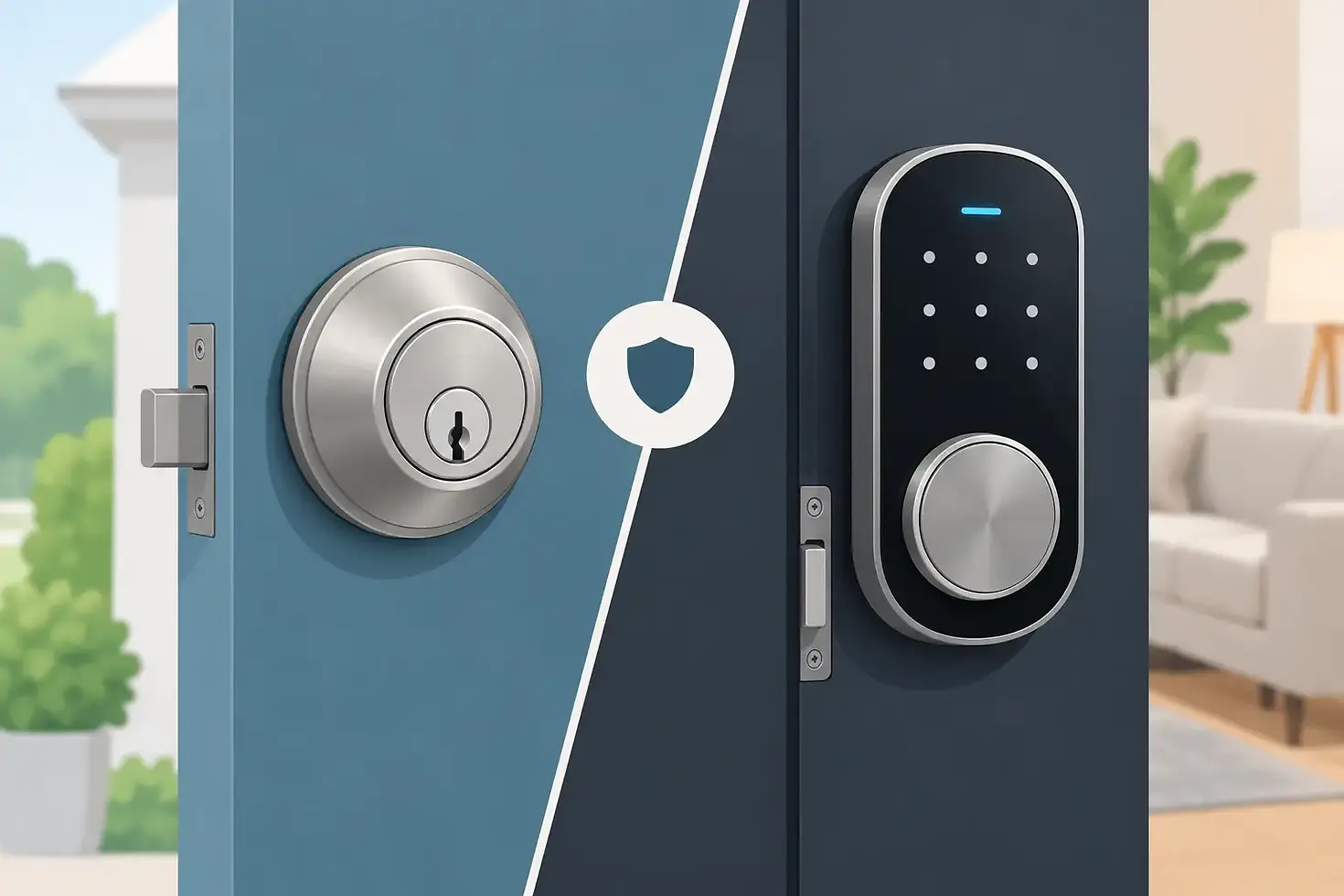
Deadbolt vs Smart Lock: A Practical Choice

A deadbolt vs smart lock decision usually starts at the front door, but it affects much more than how you get inside. Homeowners want dependable security. Property managers need a practical way to handle tenant turnover. Small business owners may need controlled access without distributing a stack of keys.
The right choice depends on the door, the people using it, and how much convenience you want to manage. A traditional deadbolt remains a strong, straightforward option. A smart lock can add useful access control, but it also introduces batteries, settings, and electronic components that need attention.
Deadbolt vs Smart Lock: The Main Difference
A standard deadbolt is a mechanical lock operated with a physical key from the outside and a thumb turn from the inside. Its job is simple: extend a solid bolt into the door frame and resist forced entry better than a basic spring-latch lock.
A smart lock uses an electronic mechanism to control access. Depending on the model, you may use a keypad code, phone app, fingerprint reader, key fob, or physical key. Many smart locks still contain a deadbolt-style bolt. The difference is in how the bolt is activated and how access is managed.
That distinction matters. A smart lock is not automatically more secure simply because it is electronic, and a traditional deadbolt is not automatically outdated because it uses a key. Security comes from the quality of the lock, the condition of the door and frame, proper installation, and sensible access habits.
When a Traditional Deadbolt Makes Sense
A quality mechanical deadbolt is often the best fit for homeowners who want reliable protection without extra technology. There are no batteries to replace, no app permissions to manage, and no concern about a phone losing its charge when you return home late.
Deadbolts are also familiar. Most family members, visitors, and service providers understand how they work without instructions. If your home has a solid door, a properly reinforced strike plate, and a deadbolt installed correctly, you have a dependable layer of everyday security.
For many Folsom-area homes, rekeying an existing deadbolt is a cost-effective solution after a move, lost key, contractor access, or change in household circumstances. Rekeying changes which key operates the lock while allowing you to keep compatible hardware that is still in good condition.
A deadbolt may be the better option when simplicity is the priority. It is also a sensible choice for doors exposed to weather, gates, detached buildings, or locations where electronic hardware may not be practical.
The Limits of a Keyed Lock
The main drawback is key control. Keys can be copied, misplaced, borrowed, or left with people who no longer need access. If you are unsure who has a key, rekeying is usually the safer response than hoping it does not turn up in the wrong hands.
Traditional locks also do not provide an access record. You will not know whether someone entered at 3 p.m. or 10 p.m. unless someone tells you. For a single-family home, that may not matter. For a rental, office, or property with frequent vendor access, it can become inconvenient.
When a Smart Lock Is Worth Considering
A smart lock can be useful when managing access is more important than sticking with a single physical key. You can give family members separate codes, create a temporary code for a dog walker or cleaner, and remove that code when it is no longer needed. Some systems allow scheduled access, which can be helpful for rentals or small offices.
This can reduce the need to make and distribute multiple keys. It can also make tenant or employee turnover easier when the lock supports changing codes without replacing hardware. Instead of collecting every key, you can remove an old user from the system and issue a new code.
Convenience is the major selling point, but it should be treated as a benefit, not a substitute for good door security. The lock still needs to fit the door correctly. The bolt must align with the strike plate. The frame needs to be solid enough to support the hardware. A high-tech lock on a weak door frame does not solve the larger problem.
Smart Lock Trade-Offs to Plan For
Smart locks require maintenance. Most run on batteries, and a low battery can create an avoidable lockout if it is ignored. Reputable models typically provide low-battery warnings and an emergency power option, but homeowners still need a plan.
Electronic locks can also be more sensitive to installation errors. If the bolt rubs against the strike plate or the door is sagging, the motor may struggle to lock and unlock. A door that needs adjustment should be repaired before expecting any smart lock to work reliably.
App-connected locks add another decision: how much connectivity do you actually need? A keypad lock that stores codes locally may meet your needs without relying heavily on Wi-Fi or an account. A connected model can provide remote management and alerts, but it gives you another system to maintain. Choose features you will actually use.
Security Depends on the Entire Door
Whether you choose a standard deadbolt or a smart model, the hardware is only one part of the setup. A locksmith should look at the full door assembly, including the door material, jamb condition, strike plate, hinges, alignment, and existing damage.
The strike plate deserves particular attention. This is the metal plate attached to the frame where the bolt enters. A properly installed, reinforced strike plate with long screws anchored into the framing can make a meaningful difference during a forced-entry attempt. If the plate is loose or the wood around it is split, replacing the lock alone may not address the real weakness.
Door alignment matters, too. If you have to lift, push, or pull the door to get the deadbolt to turn, the hardware is under stress. That can shorten the life of a mechanical lock and cause problems with a smart lock's motor. Door lock repair may be needed before installing new hardware.
Cost, Installation, and Long-Term Value
A standard deadbolt generally costs less to purchase and maintain than a smart lock. It is also usually quicker to service and easier to rekey. If you have several doors to secure or are preparing a rental property between tenants, that difference can add up.
A smart lock typically has a higher upfront cost. You may also pay more for professional installation if the existing holes need adjustment or the door alignment is poor. In return, you may save time on key management and gain more control over who enters the property.
Think about long-term value rather than only the purchase price. A homeowner who rarely shares access may get little value from remote entry features. A property manager handling regular turnovers may find code changes far more convenient than repeated rekeying. Neither choice is universally better.
Questions to Ask Before You Choose
Start with the people who need access. Is it only your household, or do tenants, employees, relatives, cleaners, and contractors regularly come and go? Next, consider what happens when access changes. If someone moves out or loses a key, do you want to rekey the lock or change a code?
Also consider your comfort with technology. A smart lock should make life easier, not create anxiety about apps, passwords, batteries, or connectivity. If you prefer a device that works every time with a key, a quality deadbolt is hard to beat.
Finally, look closely at the current condition of the door. New hardware cannot correct a damaged jamb, a weak strike plate, or a badly aligned door. A professional inspection can help you avoid spending money on a lock that will not perform as intended.
Get the Right Lock Installed the Right Way
For most homes, the practical answer is not deadbolt or smart lock in the abstract. It is choosing dependable hardware that matches your access needs and having it installed correctly. Some homeowners prefer a traditional deadbolt on a side door and a keypad or smart lock at the main entry. Others want a mechanical lock throughout the property for consistency.
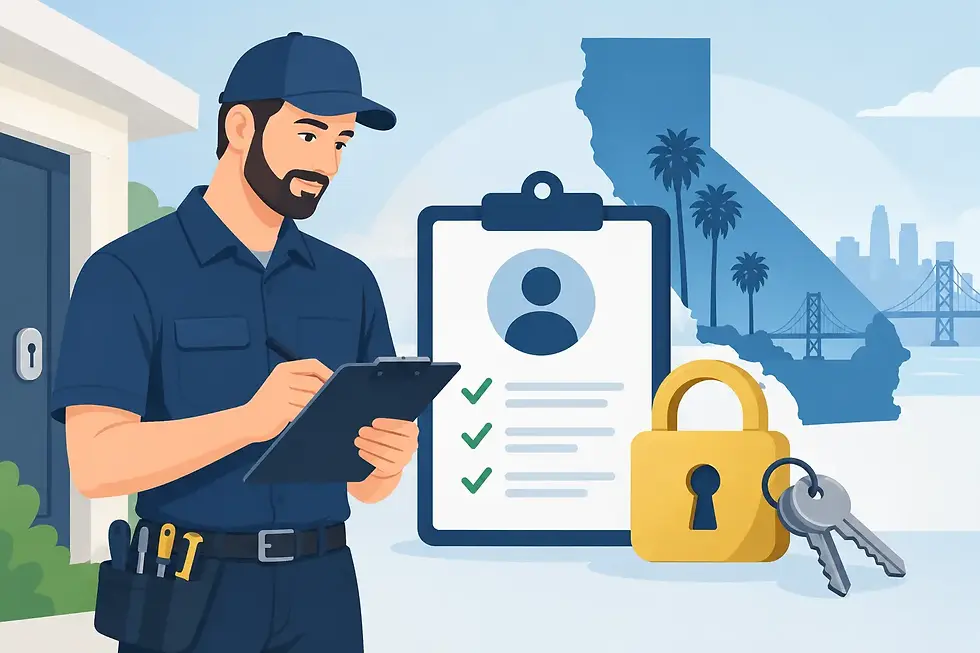
OutLock Locksmith serves Folsom and nearby Sacramento-area communities with residential lock rekeying, lock repair, and replacement service. When hiring any locksmith, verify licensing and make sure the technician explains what your door needs before recommending new hardware.
The best front-door lock is the one you can rely on every day, while giving the right people access and keeping everyone else out.

Comments