


A Practical Guide to House Lock Changes

You usually do not think much about your door locks until something changes - a move, a breakup, a lost key, a tenant turnover, or a lock that suddenly starts sticking. A solid guide to house lock changes should start there, because most people are not planning a security upgrade for fun. They are trying to solve a real problem quickly, without overpaying or making the wrong call.
The first thing to know is that "changing locks" can mean two different services. In some cases, you need a full lock replacement. In others, you only need the lock rekeyed. Those are not the same job, and choosing the right one can save time and money.
Guide to House Lock Changes: Rekey or Replace?
Rekeying means the locksmith adjusts the inside of your existing lock so old keys no longer work. You get a new set of keys, but the hardware on the door stays in place. This is often the right choice when the lock is still in good condition and you simply want to control who has access.
Lock replacement means removing the existing hardware and installing a new lock. That makes more sense when the lock is worn out, damaged, outdated, or no longer meets your security needs. If your deadbolt is loose, the latch does not line up properly, or the hardware has visible wear, replacement may be the better long-term fix.
For many homeowners, rekeying is the practical starting point after buying a home. You do not know how many copies of the old key are still out there. Previous owners may have shared keys with relatives, contractors, neighbors, pet sitters, or house cleaners. Rekeying closes that gap without forcing you to buy all new hardware.
Replacement is more common when you want to upgrade the look of the door, standardize hardware across the house, or move from basic locks to higher-security options. It also comes up when parts are failing and rekeying would only delay a bigger repair.
When House Lock Changes Make Sense
Some situations are obvious. You moved into a new place, your keys were stolen, or someone who used to have access should not have it anymore. In those cases, acting quickly matters.
Other situations are easier to overlook. Maybe your front door lock works, but you have to jiggle the key every time. Maybe the deadbolt drags because the door frame has shifted. Maybe one exterior door uses a different key from the others and you want one key for the whole house. Those are all valid reasons to schedule service.
Property managers also run into this regularly. Between tenant turnover, maintenance access, and liability concerns, it often makes more sense to rekey between occupants than to guess where old keys may have ended up. The same idea applies to homeowners with short-term rental units, guest houses, or inherited property.
A good rule is simple: if you are uncertain who has a working key, or if the lock is no longer dependable, it is time to look at house lock changes.
What a Locksmith Will Check First
A professional locksmith should not push replacement automatically. A proper visit starts with looking at the condition of the lock, the door, the strike plate, and how everything lines up when the door closes.
That matters because not every lock problem is actually a lock problem. Sometimes the hardware is fine, but the door is sagging or the latch is misaligned. In that case, replacing the cylinder alone will not fix the issue. You need the door and hardware adjusted so the lock can operate correctly.
A locksmith may also check whether your current locks can be keyed alike. If you want your front door, back door, and side garage entry to work on one key, that may be possible without replacing everything. It depends on the brand, keyway, and condition of the existing hardware.
This is where a straightforward technician is worth a lot. You want someone who can explain what is necessary, what is optional, and what would only add cost without real benefit.
Security Upgrades That Are Worth Considering
Not every home needs high-security hardware, but some upgrades are worth discussing when you are already making changes. A quality deadbolt, properly installed, is usually more important than fancy features. Good alignment and solid mounting matter just as much as the brand name on the trim.
If your exterior doors still use only knob locks, adding or improving deadbolts is a smart move. If your strike plates are short or loosely secured, longer screws and a better fit can improve resistance against forced entry. If your home has multiple exterior doors with inconsistent hardware, bringing them to a consistent standard can make day-to-day use simpler and security easier to manage.
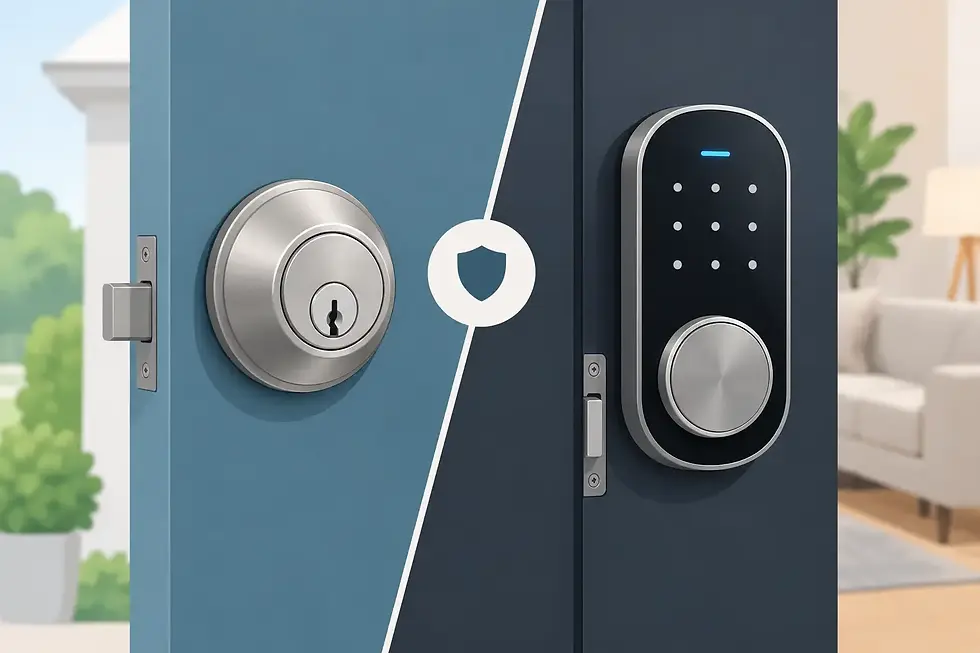
Smart locks can also make sense, but they are not right for every household. They are convenient for families, rental properties, and anyone who wants to issue codes instead of handing out physical keys. At the same time, they add batteries, programming, and electronics into the mix. Some homeowners prefer the reliability of a traditional deadbolt with a physical key. It depends on how you use the property and how much convenience you want versus simplicity.
A Short Guide to House Lock Changes After a Move
If you just bought a house, start with every exterior door that allows entry. That usually includes the front door, back door, garage entry door, and any side doors. If there are security screen doors or detached structures with keyed access, include those too.
Most new homeowners assume they can wait a few weeks. Sometimes they do, and nothing happens. But lock service is one of those tasks that is much easier to handle before routines settle in and extra keys start circulating again.
It is also a good time to simplify your setup. Many homes have a mix of old and newer hardware from different owners over the years. One door may use a brass deadbolt from twenty years ago, another may have a newer keypad, and another may barely latch. A locksmith can help you decide whether to rekey what is usable, replace what is not, and reduce the number of keys you carry.
Why Licensing Matters When You Hire a Locksmith
Locksmith work happens at the front line of property security. That is exactly why hiring based on the cheapest ad or fastest answer alone can be risky. You are trusting someone with access to your home and the physical security of your doors.
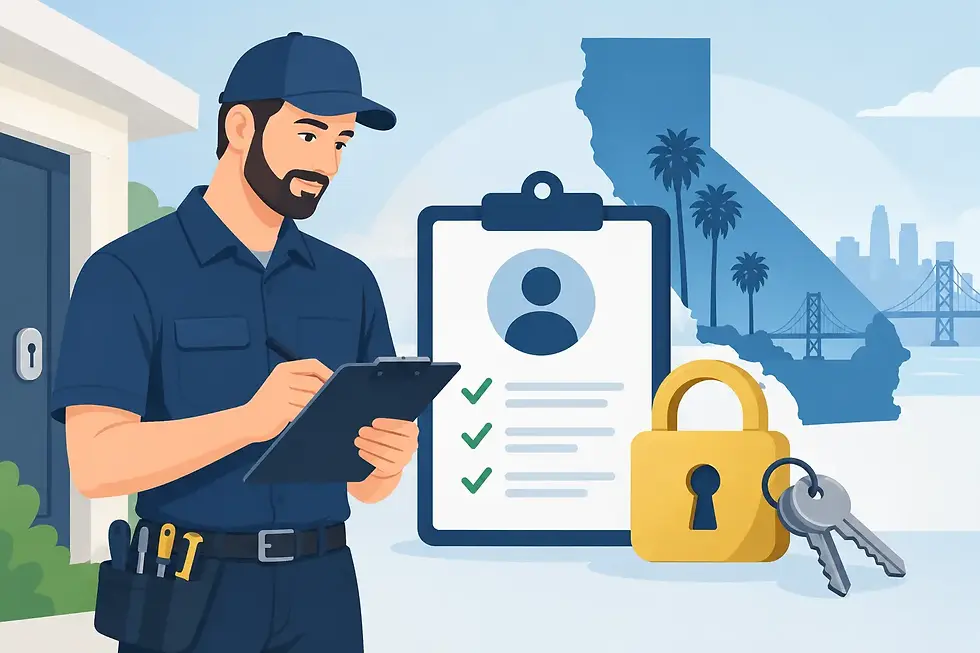
In California, customers should verify locksmith licensing through the Bureau of Security and Investigative Services. That is not a formality. It is a practical way to avoid unlicensed operators who may quote one price and then pressure you into another once they arrive.
A licensed locksmith should be able to identify the service clearly, explain whether rekeying or replacement is appropriate, and provide work that matches the condition of the door and hardware. Professionalism, timeliness, and clear communication matter just as much as the tools in the van.
For local homeowners and property managers, that trust piece is often the deciding factor. A legitimate service provider is not just changing keys. They are helping protect the property without guesswork.
What Affects the Cost
The final price depends on the number of locks, the condition of the hardware, and whether the job involves rekeying, repair, replacement, or a mix of all three. A basic rekey is usually less expensive than replacing every lock on the property, but that changes if the existing hardware is damaged or low quality.
Travel, after-hours service, specialty hardware, and smart lock installation can also affect the total. If several doors can be keyed alike, that may improve convenience without a major jump in cost. If one or more locks are failing mechanically, repair or replacement may be the more honest recommendation.
The best service calls are usually the least dramatic ones. The locksmith shows up, inspects the doors, explains the options plainly, and completes the work without turning a normal security update into a sales pitch. That is the standard people should expect.
House lock changes do not have to be complicated. If you know when to rekey, when to replace, and why licensed service matters, you can make a confident decision and move on with one less thing to worry about.

Comments