


Best Lock Upgrades After Burglary That Work

A burglary changes how a front door feels. What used to be an ordinary entry point can suddenly seem like the weak spot in the house. The best lock upgrades after burglary should address what actually happened at the property, not just add the most expensive hardware available.
A professional inspection can show whether the lock was picked, forced, bypassed through a damaged strike plate, or compromised because a key was available to someone who should no longer have it. That distinction matters. A new lock alone may not solve a weak door frame, while a damaged deadbolt may need replacement even if the door itself is sound.
For homeowners, property managers, and small business owners in Folsom and nearby Sacramento communities, the goal is practical security: control who has keys, strengthen the entry points burglars target, and make sure the hardware works correctly every day.
Start With Rekeying or Replacing the Lock
The first question after a burglary is not always, “Which lock should I buy?” It is, “Who could still have a working key?” If keys were stolen, copied without permission, left with a former tenant, or simply cannot be accounted for, rekeying should happen right away.
Rekeying changes the internal pins of a compatible lock so old keys no longer operate it. It is often the most cost-effective choice when the existing hardware is in good condition and provides the level of security you need. You receive new keys without replacing every exterior lock.
Replacement makes more sense when the lock is worn, damaged, low quality, or not suited to the door. A deadbolt that binds, has a loose cylinder, or was forced during entry should be evaluated rather than assumed safe because it still turns. Damage inside the lock or door can affect how it performs during another attempted break-in.
For rental properties, rekeying between occupants is a sensible standard practice. After a burglary, it also gives owners and tenants a clear reset of key access without waiting for uncertainty to become another problem.
Upgrade to a Grade 1 Deadbolt Where It Counts
For most residential exterior doors, a properly installed Grade 1 deadbolt is one of the strongest lock upgrades available. ANSI/BHMA grading evaluates lock hardware for strength, durability, and operation. Grade 1 is generally the highest rating for heavy-duty residential and commercial-style use, while Grade 2 can be suitable for many homes when installed correctly.
The key phrase is “installed correctly.” A high-grade deadbolt mounted into a weak frame, short screws, or damaged wood will not perform as intended. The bolt needs to extend fully into a reinforced strike area, and the lock should align without forcing the key or thumb turn.
A single-cylinder deadbolt, which uses a key outside and thumb turn inside, is common for residential doors. If glass is close enough to the inside thumb turn that someone could break the glass and reach it, a double-cylinder deadbolt may be considered. That option has a serious trade-off: occupants need a key to exit from the inside. Local fire and building requirements, along with safe emergency exit planning, must be considered before choosing one.
For many homes, the better answer is not a double-cylinder deadbolt. It may be moving breakable glass farther from the lock area, reinforcing the door, or selecting a different entry configuration.
Match the Deadbolt to the Door Material
A solid wood or fiberglass door can often support a quality deadbolt upgrade well. Hollow-core exterior doors, severely split wood, warped doors, and thin or damaged metal doors may need repair or replacement before new lock hardware can do its job.
On a metal door, the condition of the door frame and reinforcement around the latch opening matter just as much as the cylinder. On older wood doors, a locksmith may find that previous hardware has left oversized holes or cracked areas that need attention before a new deadbolt is fitted.
Reinforce the Strike Plate and Door Frame
Many forced entries do not defeat the deadbolt itself. They break the strike plate area of the frame. The strike plate is the metal piece on the frame where the deadbolt enters when the door is locked. A small plate held by short screws offers limited resistance if the frame takes a hard kick or shove.
A reinforced strike plate secured with long screws that reach the wall framing can significantly improve resistance at this point. The door frame should also be inspected for splits, loose trim, and signs that the previous break-in weakened the wood. Reinforcement is often a better investment than a decorative lockset with no meaningful security rating.
The hinges deserve the same attention on outswing doors. If hinge pins are exposed on the exterior, security hinges or non-removable pins help prevent the door from being lifted off its hinges. This is not needed on every door, but it is worth addressing when the hinge side faces outside.
Consider Key Control Before Choosing a Smart Lock
Smart locks can be useful after a burglary, especially for households that want to stop relying on spare keys. They can allow codes for family, contractors, cleaners, or short-term visitors, and those codes can be removed when access is no longer needed. Some models also provide access activity records.
But a smart lock is not automatically stronger than a conventional deadbolt. Its physical bolt, strike plate, door alignment, battery maintenance, and installation quality still determine much of its real-world security. A smart lock with a weak strike plate is still attached to a weak strike plate.
Smart locks also add decisions about batteries, app access, Wi-Fi or Bluetooth settings, and backup entry methods. Choose a recognized product with a physical key override or dependable emergency power option, and keep any backup key controlled. Change app passwords, remove old users, and use strong account security if the lock connects to the internet.
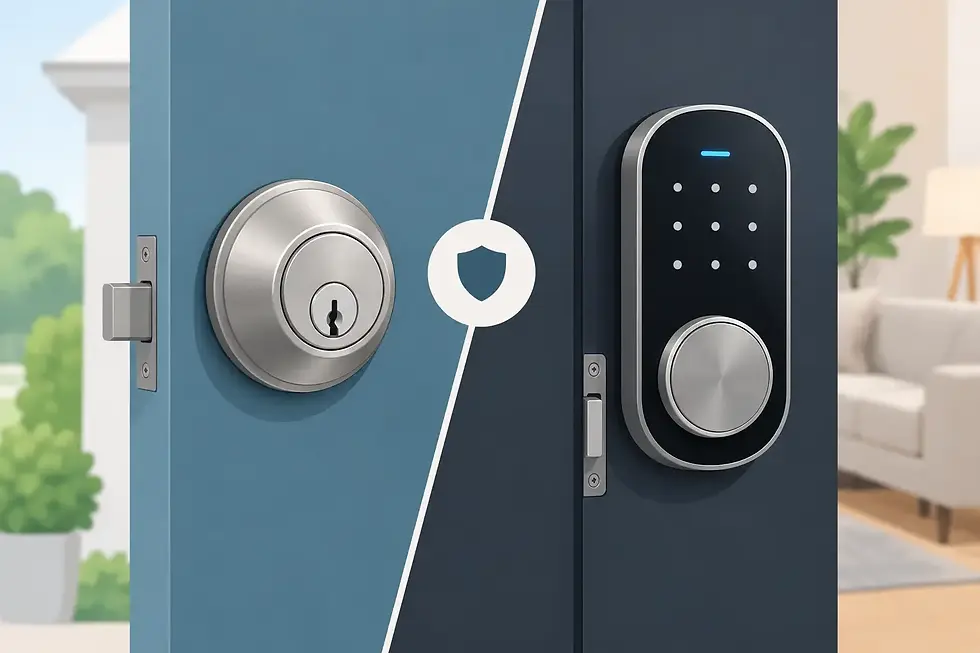
For a simple home setup, a quality mechanical deadbolt with restricted key control may be the better fit. For a rental home, office, or busy household where access changes often, a keypad or managed electronic lock may save time and reduce the number of physical keys in circulation.
Do Not Overlook Secondary Doors and Sliding Doors
Burglars may choose the least protected entry, not the front door. After securing the primary entry, inspect the garage access door, side door, rear door, patio slider, and any door connecting a garage to living space. These areas are commonly overlooked because they are less visible from the street.
Sliding glass doors need more than the factory latch. A properly fitted security bar or track lock can help prevent the panel from being forced open. Depending on the door design, anti-lift hardware may also reduce the chance of the panel being lifted out of its track. The existing latch should be checked for wear, alignment, and damage.
For a small business, rear service doors and employee entrances should receive the same attention. A commercial-grade deadbolt, lever lock, or access-control solution should be selected based on occupancy, fire code requirements, and the number of people who need access. A lock that is difficult for authorized staff to use safely is not a good long-term solution.
Avoid These Common Post-Burglary Mistakes
It is understandable to want an immediate fix, but quick purchases can leave the same weak points in place. Avoid relying on a new knob lock as the primary protection for an exterior door. Knob locks are useful for latching, but a deadbolt provides the main resistance against forced entry.
Also avoid installing new hardware over damaged wood or a bent door frame without repair. If the door does not close squarely, the deadbolt may not fully engage. Finally, do not hand out new keys without tracking them. Security improves when you know exactly who has access.
A practical post-burglary check should cover the lock condition, key control, deadbolt grade, strike reinforcement, frame condition, hinges, and less-visible entry doors. That creates a complete picture rather than treating the lock as an isolated part.
Choose a Licensed Local Locksmith
After a burglary, people are often pressured by time and worried about another attempt. That makes it especially important to verify who is working on your property. Ask whether the locksmith is properly licensed in California, request clear information about the work recommended, and make sure you understand whether rekeying, repair, or replacement is being performed.
OutLock Locksmith serves Folsom-area homes and businesses with practical rekeying, lock repair, and replacement services. Professionalism, excellence, and timeliness matter most when security work needs to be done right the first time.
The right upgrade is the one that closes the weakness found at your door, fits how your household or business uses access, and leaves you confident that old keys and damaged hardware are no longer part of the problem.

Comments