


Master Key System for Small Business

If you have ever had to sort through a ring of office keys while an employee waits at the front door, you already understand the appeal of a master key system for small business. The right setup gives owners and managers better control without making daily access harder for staff. It can also reduce confusion, tighten security, and make lock changes more practical when roles change.
For a small business, key control is usually less about fancy hardware and more about everyday reality. You may have one person opening the building, another handling inventory, and a third who only needs access to a back office once a week. When every door has a separate key, things get messy fast. When too many people share the same key, security gets loose just as quickly.
What a master key system for small business actually does
A master key system organizes your locks into levels of access. Each employee can have a key that opens only the doors they need, while a manager or owner carries one master key that opens multiple designated doors. That means you can limit access at the individual level without carrying a bulky keychain or relying on one key for the whole property.
In practical terms, a retail shop might give staff a key for the front entrance and employee area, while the owner keeps a master key that also opens the stockroom and office. In a small medical office, front desk staff may need the lobby and records area, while management needs broader access across the suite. A warehouse office may separate admin rooms, tool storage, and exterior doors. The system is flexible, but it needs to be planned carefully from the start.
That planning matters because not every business needs the same structure. A small single-suite office may only need two or three access levels. A multi-tenant commercial property or business with sensitive storage may need a more detailed hierarchy. The goal is not to make the system complicated. The goal is to make access intentional.
Where small businesses benefit most
The biggest advantage is control. A good master key system lets you decide who can enter which areas, instead of handing out broad access just because it is convenient. For businesses with employee turnover, part-time staff, cleaning crews, or delivery access, that control becomes even more valuable.
There is also a day-to-day efficiency benefit. Owners, supervisors, and property managers waste less time sorting keys or tracking who has access to what. If a manager needs to check a supply room, unlock a side entrance, and open a private office, one key can handle it. That is a small convenience until you do it every day.
Another often overlooked benefit is rekeying strategy. In many small businesses, when one employee leaves and a key is missing, the first question is whether every lock now needs to be changed. With a well-designed system, a locksmith can often address the affected cylinders in a more organized way. It does not always make changes cheap, but it makes them more manageable.
The trade-offs business owners should understand
A master key system is useful, but it is not automatically the right answer for every property. The main trade-off is that the system has to be built and maintained correctly. If locks are added one at a time without a plan, you can end up with compatibility issues, weak key control, or a setup that no longer reflects who should have access.
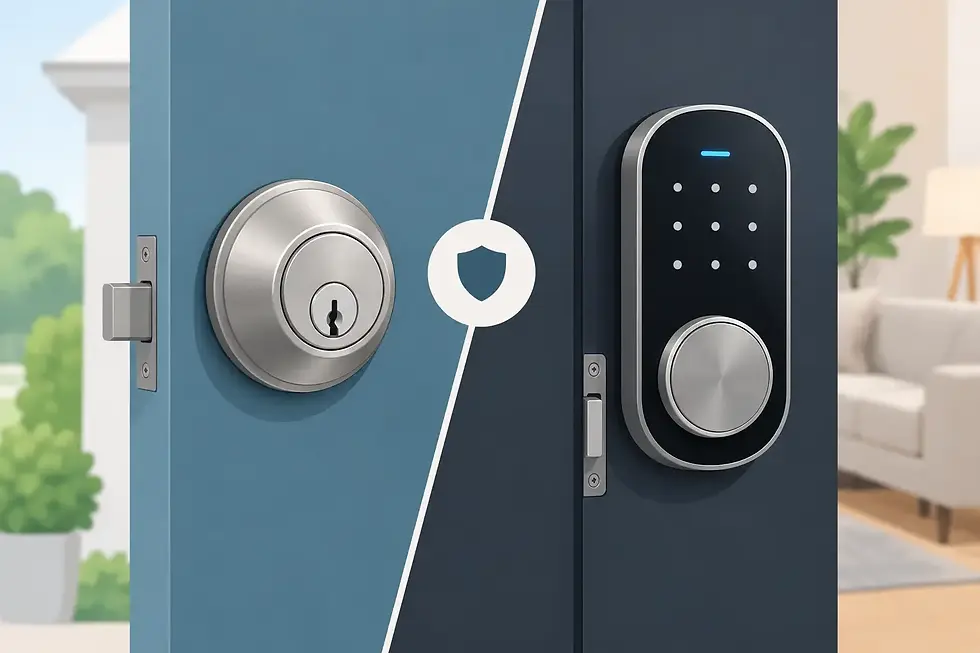
There is also the question of security depth. Traditional keyed systems still depend on physical keys. Keys can be copied, lost, or passed around unless the business manages them closely. Some owners assume a master key system alone solves accountability. It does not. It improves structure, but the business still needs key tracking and clear internal rules.
Cost is another factor. A basic rekey or standard lock replacement may be enough for a very small operation with only one or two doors. A master key system tends to make more sense when there are several interior doors, different staff roles, or a need to separate access by area. If your property has only a front door and one office, a full system may be more than you need.
How to tell if your business needs one
A few signs usually point in the same direction. If multiple employees need different access levels, if you regularly hand keys to vendors or temporary staff, or if managers carry too many keys, a master key setup is worth discussing. It is also worth considering after a lease takeover, staff turnover, or a business expansion into additional suites or storage areas.
Small businesses often wait until there is a problem. A lost key, an ex-employee who still has access, or a door that was changed without matching the rest of the building is what finally triggers the call. It is better to address the layout before those gaps become expensive.
If you are unsure, walk your property and answer a simple question for each door: who truly needs access here? That alone usually reveals whether your current setup is too loose or too fragmented.
Planning a master key system without overcomplicating it
The best systems start with a simple door-by-door review. Identify exterior doors, restricted areas, common-use rooms, and management-only spaces. Then match those areas to actual job roles instead of job titles on paper. A business owner may think every supervisor needs broad access, but the real workflow may show otherwise.
Keep the number of access levels reasonable. Too many exceptions can make the system harder to manage than the old keychain you were trying to replace. In many small businesses, three levels are enough: employee access, limited restricted access, and master access for ownership or management.
It is also smart to think ahead. If you expect to add offices, storage, or another tenant space later, mention that during planning. A locksmith can often structure the system to allow for future growth. That does not mean guessing at every possible change. It means leaving room for likely ones.
Why professional setup matters
A master key system is not just about pinning cylinders so one key works in several locks. It is about making sure the hardware is appropriate, the access structure makes sense, and the work is documented clearly. Poorly planned systems create confusion later, especially when rekeying, replacing locks, or issuing new keys.
This is also where legitimacy matters. Commercial locksmith work affects business security, employee access, and liability. You want a licensed locksmith who can explain the setup plainly, do the work correctly, and help you avoid shortcuts that create problems later. In California, that starts with verifying locksmith licensing through the Bureau of Security and Investigative Services.
For local businesses in Folsom and nearby Sacramento-area communities, that practical approach matters more than sales language. You need locks that work, keys that are assigned properly, and a system that fits the actual building.
Common mistakes to avoid
The most common mistake is giving everyone broad access because it feels easier. That defeats the whole purpose. Another is mixing old and new locks without checking whether they can be incorporated into the same system. Some hardware can be rekeyed into a structured plan, and some should simply be replaced.
A third mistake is failing to keep records. If no one knows who has which key, the system loses value quickly. Even a small business should maintain a basic key log and collect keys promptly when staff roles change.
There is also the issue of relying on worn or damaged hardware. If the door closer is failing, the latch is misaligned, or the lock is sticking, rekeying alone will not solve the real problem. A good locksmith should tell you that directly.
When a master key system is the right fit
For many small businesses, the right answer is not more keys or fewer keys. It is smarter key control. A master key system works best when you want to separate access by role, simplify management, and keep your building practical to operate every day.
It does require planning. It does require trust in the person doing the work. And it does require some discipline after installation. But when it is set up properly, it can make your business easier to manage and more secure at the same time.
If your current keys only make sense to the one person who has carried them for years, that is usually a sign it is time for a cleaner system.

Comments