

How to Repair Door Lock Handle Problems

# How to Repair Door Lock Handle Problems
> Learn how to repair door lock handle issues, spot worn parts, tighten loose hardware, and know when a licensed locksmith is the safer fix.
A door lock handle usually starts failing in small ways. The lever feels loose. The latch sticks. You have to lift the handle, jiggle the key, or pull the door just right to get it to close. If you are searching for how to repair door lock handle issues, the first step is figuring out whether the problem is in the handle, the latch, the strike alignment, or the lock cylinder itself.
That matters because a loose interior screw is a very different repair from a worn commercial lever set or a misaligned deadlatch on an exterior door. Some fixes are simple and safe for a homeowner. Others are better left to a licensed locksmith, especially when security, fire-rated hardware, or tenant access is involved.
## How to Repair Door Lock Handle Issues the Right Way
Before taking anything apart, test the door with it open and then closed. If the handle works smoothly with the door open but binds when the door is shut, the issue is often alignment rather than the handle mechanism. If it sticks in both positions, the handle or latch assembly is more likely the problem.
Check for obvious movement first. A handle that sags, spins, or pulls away from the door usually has loose mounting screws or a worn internal spring. A latch that does not retract fully may be dirty, damaged, or installed out of position. If the key turns but the handle still does not operate correctly, the cylinder may not be the real cause.
For most standard residential locksets, you will need a screwdriver, good lighting, and a little patience. Keep the screws and small parts together as you go. If the lock is on an exterior door, avoid forcing anything. A rushed repair can leave the door unsecured.
### Start with the simple fix
Many door handle problems come from loose through-bolts or trim screws. Tighten the visible screws on the interior side first. Hold both sides of the handle steady while tightening so the hardware seats evenly against the door. If one side shifts, the spindle can bind and make the handle feel worse, not better.
Once tightened, test the handle several times. If the lever returns to level and the latch retracts cleanly, you may be done. If the handle still droops or feels sloppy, the return spring inside the chassis may be worn out.
### Remove the handle and inspect the latch
If tightening does not solve it, remove the inside trim and handle according to the hardware style. Some knobs and levers have a small release slot, while others use exposed screws. After removing the handle, inspect the spindle, mounting plate, and latch body.
Look for bent parts, cracked trim, stripped screw holes, or signs that the latch is rubbing hard against the strike. Dirt and old lubricant can also gum up the mechanism. Use a dry cloth to clean loose debris. If lubrication is needed, use a lock-safe product sparingly. Heavy grease can attract dust and make the problem return faster.
If the latch bolt sticks when you press it by hand, replacement is often more practical than repair. Small internal latch parts are not usually worth rebuilding on standard residential hardware. On a higher-grade commercial lock, repair may make more sense, but that depends on the age and condition of the set.
## Common Reasons a Door Lock Handle Fails
Most handle failures fall into a few categories, and each one points to a different fix.
A loose handle is often caused by screws backing out over time or wear inside the handle assembly. This is common on busy household doors, rental units, and office entries. If tightening the hardware does not restore normal operation, the handle body itself may be worn.
A sticking latch usually points to misalignment or internal wear. Wood doors swell with seasonal changes, hinges sag, and strike plates shift. In those cases, the handle may be working fine, but the latch is hitting the strike plate and failing to move freely.
A handle that turns without opening the door can mean the spindle is damaged or disconnected from the latch mechanism. Sometimes a set screw has loosened. Sometimes the inside parts have simply reached the end of their service life.
If the key is hard to turn along with handle trouble, the issue may involve both the cylinder and the lock body. That is where DIY work becomes less predictable. You do not want to misdiagnose a security problem and leave an exterior door unreliable.
## When Alignment Is the Real Problem
One of the most common mistakes is replacing a handle when the door is actually out of alignment. You can spot this by looking at latch marks on the strike plate. If the latch is scraping above, below, or beside the opening, the handle may feel stiff even though it is not broken.
Check the hinges for loose screws first. Tightening them can sometimes correct the door position enough for the latch to line up properly. If the door has dropped, longer hinge screws into the framing may help stabilize it. Test the door again before replacing any lock parts.
If the strike opening is slightly off, minor adjustment of the strike plate may solve the problem. Still, there is a line between adjustment and over-modifying the frame. On a rental property, storefront door, or solid-core exterior entry, a cleaner professional repair is usually the better call.
## How to Repair Door Lock Handle Parts vs Replace Them
There is no single rule here. It depends on the grade of hardware, the age of the lock, and whether the door protects a home, office, or interior room.
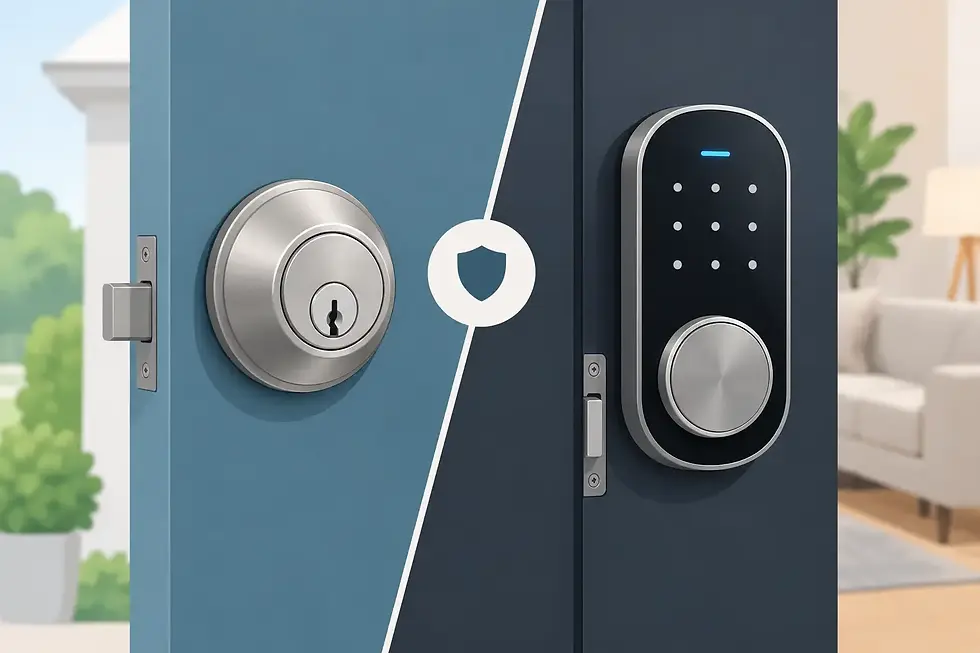
For [basic residential hardware](https://www.outlockfolsom.com/post/residential-lock-repair-when-to-fix-or-repair), replacement is often the most efficient option when the internal spring, spindle connection, or latch body has failed. These parts are inexpensive compared with the time spent trying to rebuild them. If the finish is worn, the handle has play, and the latch is inconsistent, replacing the full set often gives a better result.
For better-quality hardware, especially on commercial doors, repair may be worth it if the chassis is still sound and replacement parts are available. The trade-off is that matching parts can take more time, and improper installation can create code or security issues.
If the lock is part of a master key system, a panic hardware setup, or a commercial lever with specific access requirements, do not guess. A wrong replacement can create bigger problems than the original failure.
## When to Call a Licensed Locksmith
A door handle issue crosses into locksmith work when security, rekeying, or hardware compatibility becomes part of the job. If your exterior handle is failing and you are not sure whether the lock still secures properly, that is a good time to bring in a professional.
The same goes for broken key symptoms, cylinder problems, tenant turnover, storefront hardware, or repeated latch failure after a DIY fix. A licensed locksmith can tell whether the issue is the handle, the latch, the door alignment, or the key cylinder without swapping parts blindly.
That matters in California, where consumers should [verify locksmith licensing](https://www.outlockfolsom.com/post/how-to-check-locksmith-license-in-california) before hiring anyone. A legitimate locksmith should be able to provide that information clearly. Trust and compliance are not extras in this trade. They are part of doing the work responsibly.
For homeowners and property managers in the Folsom area, a service call can also save time when the real problem is not obvious. What looks like a bad handle may actually be a worn latch, a bad fit at the strike, or a lock that [needs rekeying](https://www.outlockfolsom.com/post/what-is-lock-re-keying-and-when-do-you-need-it) along with hardware replacement.
## A Few Repairs Are Not Worth Delaying
If the handle is on your front door and works only some of the time, treat that as a security issue. If the latch does not fully engage, the door may appear closed without actually locking. If the handle binds badly, someone may end up locked out or unable to secure the property.
On commercial doors, worn lock handles can also become a liability issue. Staff may not report a failing lever until it stops working completely. By then, the fix may involve both the handle and the door closer, frame alignment, or cylinder service.
A careful repair is always better than forcing the door for another few weeks. Hardware usually gives warning before it fails. The smart move is to address it while the fix is still straightforward.
If your door lock handle has started sticking, sagging, or turning without doing its job, take that seriously but keep the diagnosis simple. Start with fit, movement, and visible hardware. If the repair reaches the point where security or proper function is in question, a licensed locksmith is the safer next step.

Comments